


Compressed Biogas Plants
Raw Material Processing
5 TPD till 600 TPD
Waste Type:
Spentwash, MSW, Pressmud and Napier Grass
CBG Production
3 TPD till 10 TPD
Concept
End to End CBG Plant
Input:
Output:
Location:
Input:
Output:
Location:
Input:
Output:
Location:
Input:
Output:
Location:
Input:
Output:
Location:
Overview
Compressed Biogas (CBG) is a renewable energy solution that converts organic and biodegradable waste into high-purity biomethane through controlled biological and engineering processes. At Green Elephant, CBG technology is developed as a long-life infrastructure asset, designed for reliability, scalability, and consistent gas quality.
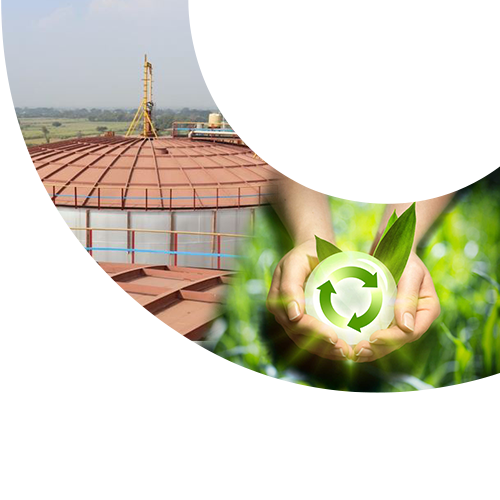
Feedstock Processing and Anaerobic Digestion use round photo of Digester
The process begins with the handling and pre-treatment of organic feedstocks such as agricultural residues, agro-industrial waste, food waste, and municipal organic waste. Feedstock is conditioned to ensure uniform particle size, appropriate solids concentration, and stable organic loading rates before being fed into the digester.
Anaerobic digestion is carried out under controlled conditions to maintain biological stability, optimise volatile fatty acid (VFA) levels, and support sustained methane production. Temperature, pH, alkalinity, and retention time are carefully managed to ensure continuous operation and resilience against feedstock variability.
Biogas Production and Conditioning use photo of biogas plant
The digestion process generates raw biogas primarily composed of methane (CH₄), carbon dioxide (CO₂), hydrogen sulphide (H₂S), moisture, and trace gases. Raw biogas is conditioned through moisture removal and pre-treatment systems to protect downstream equipment and ensure stable upgrading performance.
Gas Upgrading and Purification use pho
Advanced gas upgrading systems are employed to remove CO₂, H₂S, moisture, and other impurities from raw biogas. Green Elephant’s upgrading technology is designed to achieve biomethane purity exceeding 96% methane, with hydrogen sulphide levels reduced to below 5 ppm, even when processing inlet biogas streams with H₂S concentrations as high as 35,000–40,000 ppm.
The upgraded biomethane meets stringent quality specifications required for compression, storage, and end-use applications.
Compression and Storage
Purified biomethane is compressed to the required pressure for storage and distribution, making it suitable for use as a renewable substitute for compressed natural gas (CNG). The compressed gas can be supplied to industrial consumers, transport applications, or grid-injection systems, subject to regulatory requirements.
Automation, Monitoring, and Plant Intelligence
CBG plants are supported by advanced automation and monitoring systems that track biological health, process performance, and gas quality in real time. Continuous data analysis enables early detection of deviations, proactive corrective actions, and optimisation of plant efficiency, ensuring high uptime and predictable output.
Environmental and Sustainability Benefits
CBG technology enables effective waste valorisation, reduces methane emissions from unmanaged waste, and displaces fossil fuels with renewable biomethane. The process supports circular economy principles by converting waste into energy while producing digestate that can be further processed for agricultural use.
Asset Design and Long-Term Performance
Green Elephant’s CBG projects are engineered for long-term operation, regulatory compliance, and economic viability. Emphasis is placed on biological resilience, equipment reliability, and operational flexibility to ensure stable performance over the plant life cycle.